
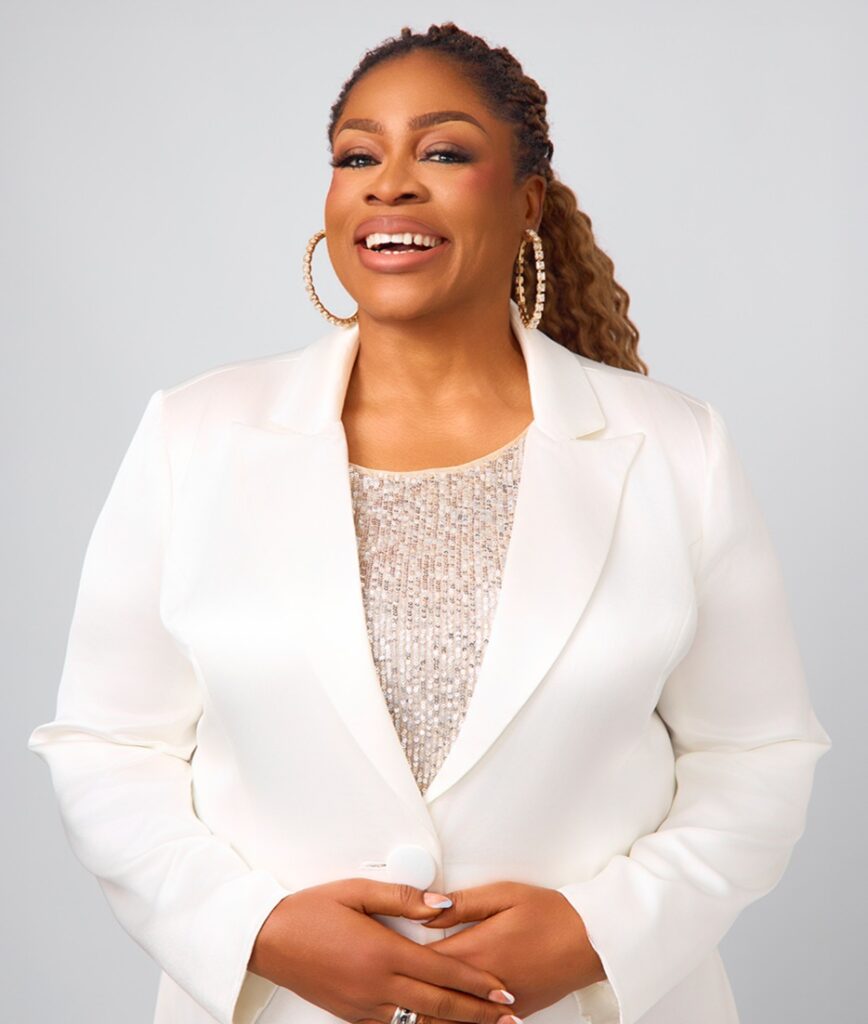
After more than two years of legal battle over the copyright ownership of her hit song, “Way Maker”, Nigeria’s super star gospel artiste, Mrs. Osinachi Joseph Egbu, with stage name, Sinach has finally come out victorius.
A federal high court in Lagos, presided by Justice A. Lewis-Allagoa, affirmed in a judgment delivered on July 24, 2026 that Sinach is the sole author, creator and copyright owner of the musical work, Way Maker.
The highly successful and inrernationally acclaimed gospel music became a subject of legal dispute following the claim by the music producer, Michael Oluwole that he was a co-author and co-owner of the multiple award-winning song.
In the Suit No. FHC/L/CS/402/2024, filed on March 8, 2024 by his counsel, Matthew Enilobo, the plaintiff claimed that he was entitled to “equitable sharing of all fees from licences and assignments” accruing from the song.
But the court dismissed the suit in its entirety, saying that being the song producer did not in any way confer the plaintiff the right to co-authorship and co-ownership of Way Maker.
According to the judge, by filing the suit the music producer, Oluwole, had merely embarked on a “gold-digging” venture hence his case was “unmeritorious”.
Based on his claim of co-authorship and co-ownership, the plaintiff had alleged that the defendant had been infringing on his performer’s rights given that he was the performer of the accompanying and underlying musical instruments in the sound recording.
He, therefore, asked the court to award him N5 billion in general damages against the defendant.
Among other reliefs, the plaintiff urged the court to issue an order of perpetual injunction restraining the defendant from reproducing, distributing, publicly performing or causing others to reproduce, distribute, or publicly perform sound recordings of the defendant’s performances in Way Maker.
However, Justice Lewis-Allagoa held that the plaintiff completely failed to prove co-authorship or co-ownership of the musical work, which is the pillar of all his claims.
The Court found that the song “Way Maker” was originally created and performed by the defendant, recognising her prior performance of the song in South Africa.
It further held that both the creation and performance of the song had taken place before the plaintiff was engaged to mix and master the already existing work for commercial album release in 2015.
“The evidence also shows that the part played by the plaintiff was that he was contracted to produce the song into a musical work for a fee which he was paid,” the court said.
Acording to the court, the plaintiff, having been contracted and paid for his technical services under an oral agreement, could not turn round to claim co-authorship and co-ownership of the song he had made no original input.
It emphasised that authorship under copyright law “vests in the natural person who creates the original expressive content” (melody, harmony, lyrics or arrangement).
“Given the state of evidence, the plaintiff cannot successfully claim to be the creator of the song, Way Maker. The author of the said song is surely the defendant(Sinach), who had performed the song internationally and won awards.
“Authorship vests ownership of the copyright in that person from the moment of creation, without registration or formal notice required.
“The author holds exclusive rights to reproduce, distribute, perform and license the work,” the court stated, citing provisions in the Copyright Act (now the Copyright Rights & Related Management Act).
Puncturing the plaintiff’s claim to co-authorship and co-ownership of the song, the court held that “not every person involved in creating a recording is an author”.
“A producer, engineer or session musician or sound technician may contribute materially to the finished product but does not become an author unless they created the original expressive content.
“The author must be the original creative mind,” the court asserted.
The court agreed with the defendant’s legal team led by Emeka Etiaba, SAN, who averred that the plaintiff’s own evidence and admissions under examination confirmed that the defendant brought an existing song which he then developed into a recorded musical work for a fee.
Meanwhile, the Chairman of Slic Inspire Ltd. and Gosgem Records (companies that manage Sinach), Joseph Egbu, have together with Sinach, reacted with happiness over the resolution of the legal dispute.
They also expressed profound gratitude to the legal team comprising Emeka Etiaba, SAN, Omolola Aderolu and O.G. Ofomata “for their diligent and professional representation that secured this favourable outcome”.