By Edise Ekong
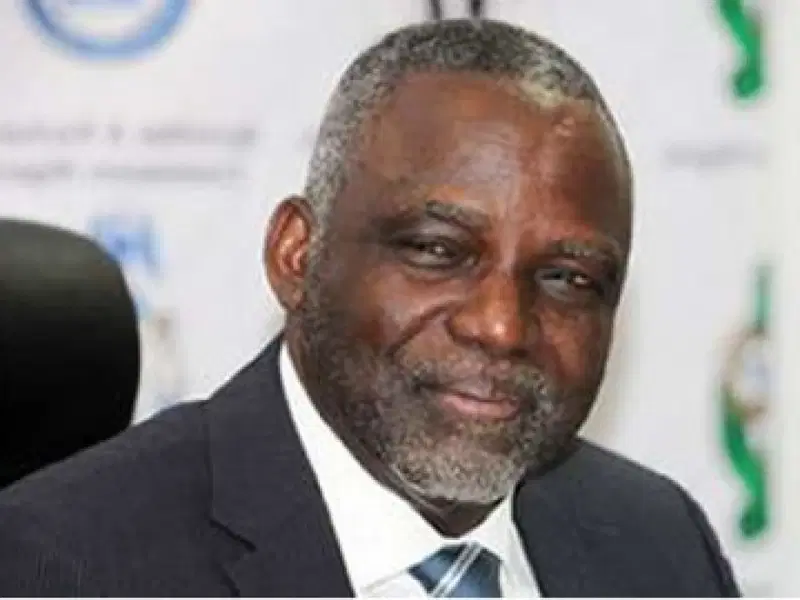
Nigeria’s engineering, business, academic and public policy communities are preparing to celebrate former Minister of Power and Chairman of the Geometric Power Group, Professor Bartholomew Okechukwu (Bart) Nnaji, who turns 70 this month.
Over the coming days, professional colleagues, industry leaders, academics, diplomats, traditional rulers and admirers from Nigeria and abroad are expected to participate in a series of commemorative activities in Enugu, reflecting the broad recognition Prof. Nnaji has earned through decades of contributions to engineering, manufacturing, public service and electricity sector development.
The celebrations, themed “Celebrating 70 Years of Engineering the Common Good,” have prompted renewed reflection on a career that has spanned academia, robotics, manufacturing, public policy and infrastructure development.
Long before becoming a prominent figure in Nigeria’s electricity sector, Prof. Nnaji had established an international academic career in engineering.
After earning degrees in Physics and Engineering in the United States, including a doctorate in Industrial and Systems Engineering from Virginia Tech and completing post doctoral studies in Artificial Intelligence and Robotics at the Massachusetts Institute of Technology, he joined academia, becoming a distinguished professor at the University of Massachusetts and later at the University of Pittsburgh. There, he founded and directed internationally recognised research centres in robotics, computer aided engineering and advanced manufacturing.
His research in Computer Integrated Manufacturing, Robotics and Computer Aided Engineering contributed to the development of the globally recognised e Design concept, which enabled engineers working in different locations to simultaneously design, test and manufacture products using digital technologies, an approach that has since become common across global manufacturing industries.
Oliver Mobisson, an MIT trained professor of Electronics Engineering and Computer Science and former NASA consultant, once described Prof. Nnaji as “a pure genius,” a reflection of the regard in which many of his professional colleagues held his academic work.
Over the years, Prof. Nnaji’s research has attracted international recognition, earned patents and contributed to advances in manufacturing systems and engineering education.
In a tribute issued ahead of his birthday, former students from the United States, South Korea, Hong Kong, Ethiopia, Ghana and Nigeria described him as a mentor whose influence extended beyond the classroom.
> “Prof. Nnaji’s influence extends far beyond the walls of the classroom and the boundaries of the Automation and Robotics Laboratory. For decades, he cultivated not only engineers and researchers, but thinkers, leaders and individuals grounded in purpose and discipline.”
For many Nigerians, however, Prof. Nnaji is best known for his contributions to the country’s electricity sector.
In 2010, he was appointed Special Adviser to the President on Power and Chairman of the Presidential Task Force on Power before becoming Minister of Power in 2011.
During his time in office, he advocated structural reforms aimed at increasing private sector participation, improving operational efficiency and expanding electricity access. Although his tenure was relatively brief, analysts generally regard that period as an important phase in Nigeria’s continuing electricity reform programme.
Former Secretary General of the Nigeria Labour Congress and current Secretary of the Northern Elders Forum, Comrade Salisu Mohammed, described Prof. Nnaji as “the most result oriented and inspiring Minister of Power and Presidential Adviser on Power the country has ever had.”
Similarly, former Cross River State Attorney General and former Commissioner of the Nigerian Electricity Regulatory Commission, Eyo Olagoke Ekpo, said Prof. Nnaji brought “the analytic mind of a robotics engineer, the intellectual rigour of a scholar and the execution discipline of a true reformer.”
His role in establishing the Geometric Power project is widely regarded as one of the defining chapters of his career.
More than two decades ago, he conceived the idea of developing a privately financed integrated electricity utility capable of generating and distributing power within a dedicated franchise, an ambitious undertaking that would face years of regulatory, financial and contractual challenges.
The project experienced repeated delays arising from policy changes, financing constraints and legal disputes, leading many industry observers to question when it would eventually become operational.
Despite those challenges, development continued.
Former Director General of the Bureau of Public Enterprises, Bola Onagoruwa, described Prof. Nnaji as “an extremely dogged man and an optimist of the finest hue who sees no mountain when he embarks on any path breaking project.”
Today, the Geometric Power Group generates and distributes electricity within the Aba Ring Fenced Area through the 188MW Aba Integrated Power Project and the operations of APL Electric Company Limited.
The project is regarded by many industry stakeholders as a significant reference point in Nigeria’s electricity market because it combines power generation and distribution within a dedicated service area.
Former National Electric Power Authority senior manager, Cliff Eneh, observed that while most electricity companies either generate or distribute power, Geometric Power performs both functions within the same franchise, describing the model as one that has demonstrated practical viability.
Improved electricity supply has also drawn attention from manufacturers operating within the Aba Ring Fenced Area.
According to Law Umeh Ude, Chairman of Blue Pharmaceuticals, businesses within the franchise have experienced a level of supply that has helped improve industrial operations when compared with many manufacturing clusters across the country.
Beyond infrastructure development, Prof. Nnaji has continued to support engineering education, indigenous technical capacity and technology transfer through his academic work, business interests and professional engagements.
His contributions have earned national honours, including the Commander of the Order of the Niger, CON, and the Officer of the Order of the Niger, OON, as well as fellowships from several engineering and scientific institutions in Nigeria and abroad.
Among activities marking his 70th birthday is a golf tournament scheduled to hold in Enugu, alongside a symposium that will examine his contributions to engineering, industrial development and electricity sector reforms. Religious and cultural activities are also expected to form part of the commemorations.
As Prof. Nnaji marks his seventieth birthday, tributes continue to come from academia, government, industry and the international engineering community.
His career has traversed university research, manufacturing innovation, public service and electricity infrastructure, areas in which his work continues to feature in discussions on Nigeria’s industrial development and the evolution of its electricity sector.
For many of those participating in the celebrations, the occasion is not only a personal milestone, it is also an opportunity to reflect on the role engineering, innovation and long term investment can play in national development.